
Renting a Car While Traveling: When It Is Worth It & How to Save
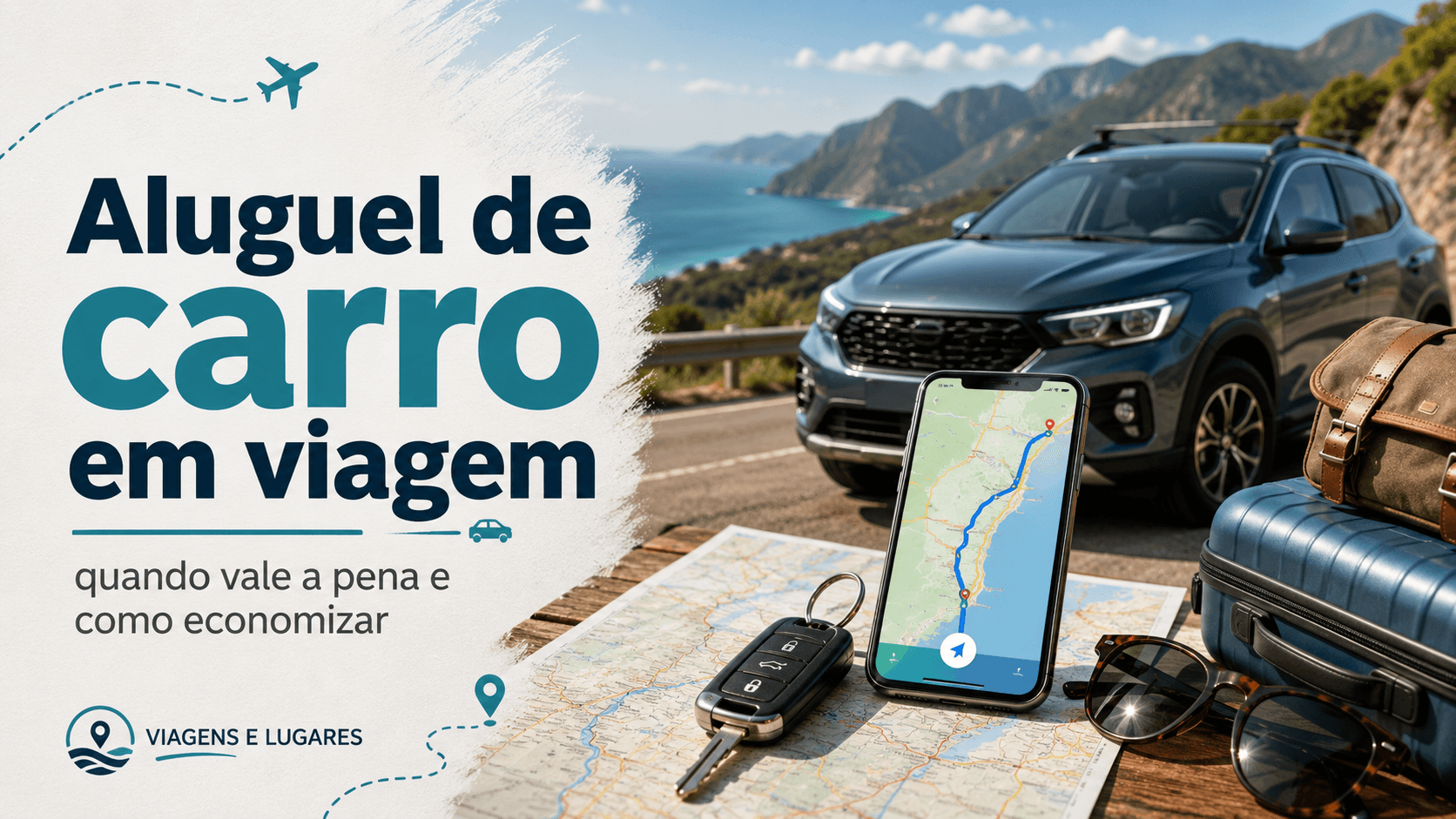
Renting a car while traveling can be one of the best decisions in your itinerary — or a completely unnecessary expense. It depends on the destination, distances between attractions, parking costs, the number of people traveling and the kind of experience you want.
In some places a rental car gives you the freedom to reach remote beaches, viewpoints, nearby towns, parks, wineries and restaurants outside the city center. In others, traffic, restricted zones and expensive parking turn a car into a burden.
This Viagens e Lugares guide explains when renting a car is worth it, how to compare rates, which extra costs to watch for, what protection to review and how to avoid common mistakes before booking.
Is renting a car worth it?
Yes when it improves the itinerary, saves time, simplifies transportation or gives access to places that would otherwise be difficult to reach by public transport.
Avoid renting automatically when the destination has good public transport, concentrated attractions, expensive parking, heavy traffic or strict driving restrictions.
Quick summary
- Best for: road trips, remote beaches, mountains, parks, wineries, small towns and family trips.
- May not be worth it: dense cities with efficient metro systems, heavy traffic and costly parking.
- Before booking: compare total rate, coverage, deposit, fuel policy, mileage, tolls and pickup location.
- Common mistake: looking only at the daily rate and ignoring extras.
When does renting a car make sense?
Car rental makes the most sense when your itinerary depends on flexibility. This is especially true when attractions are spread out or public transport does not reach them easily.
- You want to take independent day trips.
- You plan to visit remote beaches, viewpoints or parks.
- You are traveling with children, older adults or a lot of luggage.
- You will split the cost with two or more people.
- The destination has limited ride-hailing or taxi coverage.
- You want to leave early and return on your own schedule.
- You are planning a road trip.
When is a rental car not worth it?
In many large cities, a car can be more trouble than help. If the destination has metro, trains, efficient buses, centrally located attractions and reliable ride-hailing, renting may not be necessary.
- You will stay only in the city center.
- Your hotel charges high parking fees.
- Most attractions are near metro or train stations.
- The destination has heavy traffic.
- There are restrictions on tourist vehicles.
- You are uncomfortable driving abroad.
What should you compare before booking?
The lowest daily rate is not always the cheapest total. A low base price can become expensive after adding coverage, deposits, fees, limited mileage, fuel, tolls and additional drivers.
- Total price: compare the full booking amount.
- Mileage: check whether it is unlimited or capped.
- Vehicle protection: see what is included and excluded.
- Security deposit: confirm the amount blocked on your card.
- Fuel: understand the return policy.
- Pickup location: airport pickup is convenient but not always cheaper.
- Pickup and return times: delays may trigger extra charges.
- Additional driver: often costs extra.
- One-way rental: returning in another city can be expensive.
Airport or city pickup?
Airport pickup is convenient, especially if you plan to leave for the road immediately. But that convenience can come with higher fees.
Compare three scenarios: picking up at the airport, going to the hotel first and collecting the car the next day, or renting only on day-trip days.
Which car category should you choose?
- Economy: good for couples and short city trips.
- Compact: balance between price and comfort.
- Sedan: better for luggage and highways.
- SUV: useful for families, large luggage and longer drives.
- Automatic: often more comfortable, especially abroad.
Rental-car protection: what to check
Coverage varies by rental company, destination, car category and rate. Read the terms before accepting or declining any add-on.
- Damage excess/deductible.
- Theft protection.
- Third-party liability.
- Coverage for glass, tires and mirrors.
- Roadside assistance.
- Contract exclusions.
Rental-car protection is not the same as travel insurance. They cover different risks.
Credit-card deposit: watch your available limit
Many companies place a security hold on the main driver’s credit card. It is not a final charge, but the amount must be available on your card.
- Approximate deposit amount.
- Whether a credit card is mandatory.
- Whether the card must be in the driver’s name.
- How long the hold may take to be released.
- Whether digital or international cards are accepted.
Fuel, tolls and parking
- Fuel: estimate the total driving distance.
- Tolls: check whether electronic tags are required.
- Parking: check hotel and attraction rates.
- Paid street parking: some cities require local apps.
- Fines: review speed and traffic rules.
Renting a car in Brazil
In Brazil, renting often makes sense for coastal routes, mountain regions, historic towns, natural parks and itineraries with many transfers. In large capitals with heavy traffic, public transport, ride-hailing or organized tours may be easier.
Renting a car abroad
When renting overseas, check license requirements, driving side, toll systems, parking, restricted traffic zones and rental-company rules.
- Whether an International Driving Permit is required.
- Minimum rental age.
- Young-driver fees.
- Cross-border rules.
- Manual vs automatic transmission.
- Credit-card requirements.
- Local parking regulations.
Checklist before driving away
- Photograph all sides of the car.
- Record existing scratches and dents.
- Check tires, windows, mirrors and spare tire.
- Confirm fuel level.
- Confirm starting mileage.
- Test lights, air conditioning and wipers.
- Keep the contract and receipts.
- Confirm return location and time.
How to save on a rental car
- Book early during high season.
- Compare airport and city locations.
- Do not rent on days the car will sit unused.
- Choose the right category, not automatically the cheapest.
- Check additional-driver fees.
- Avoid one-way returns unless necessary.
- Read the fuel policy.
- Compare the total against public transport, tours and ride-hailing.
Common rental-car mistakes
- Booking based only on the daily rate.
- Forgetting the deposit requirement.
- Not checking coverage and deductible.
- Ignoring parking costs.
- Choosing a car too small for the luggage.
- Failing to photograph the car at pickup.
- Returning outside the agreed time.
- Ignoring toll and fuel rules.
Frequently asked questions
When is renting a car worth it?
When it saves time, improves the itinerary or allows you to reach attractions that are difficult to access otherwise. In cities with excellent public transport, heavy traffic and expensive parking, it may not be worthwhile.
Is airport pickup better?
It is more convenient, but not always cheaper. Compare the total price with city locations and consider whether you will actually use the car from day one.
Do I need extra rental-car protection?
It depends on what your rate already includes. Review deductible, security deposit, covered risks, exclusions and assistance before deciding.
Is a rental car better than ride-hailing?
It depends on the itinerary. A car can make sense for many long-distance trips, while ride-hailing or public transport can be cheaper and easier for occasional urban journeys.
Final summary
- Rent a car when it genuinely improves your itinerary.
- Compare total price, protection, deposit and fuel policy.
- Avoid renting in places where traffic and parking are major problems.
- Photograph the vehicle at pickup and return.
- Check local driving rules before renting abroad.
Transparency: some links in this post may be affiliate links. Viagens e Lugares may receive a commission if you book through them, at no extra cost to you.
About The Author


