Unofficial Carnival Opening in Rio Sets the City in Motion Early This Year
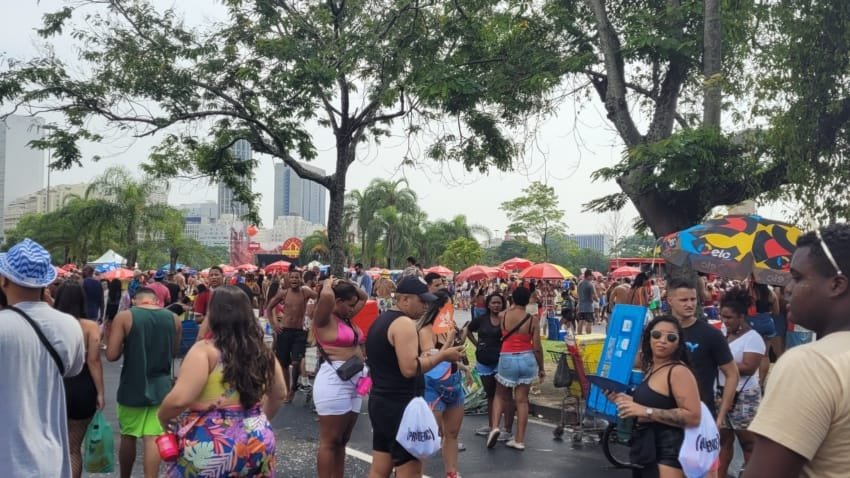
Unofficial carnival opening is the moment when people in Rio realize the year has truly begun. Even before the official carnival calendar kicks in, the city already feels different. On Sunday, January fourth, Rio de Janeiro will once again welcome the unofficial opening of its street carnival, a tradition that has grown stronger and louder every year since its creation in two thousand nine.
This celebration brings together around seventy street blocks and cultural collectives, most of them performing or parading through downtown Rio de Janeiro. Streets fill early, music echoes between historic buildings, and costumes appear long before lunchtime. It is not the official carnival yet, but for locals, that hardly matters.
This event is widely seen as the symbolic start of the carnival season, setting the tone for the months of street festivities ahead.
A Tradition Born from Independence and Street Culture
The unofficial carnival opening was created by independent carnival organizers who wanted to celebrate freely, without commercial pressure or rigid structures. The idea was simple: reclaim the streets and celebrate carnival as a collective, democratic experience.
Over the years, more blocks joined, audiences grew, and the event became an essential part of Rio’s cultural calendar. Today, it represents diversity, artistic freedom, and the deep connection between carnival and public space.
Rather than competing with the official carnival, the unofficial opening works as a warm-up, a joyful rehearsal that reminds everyone why Rio’s street carnival is one of the most vibrant in the world.
Where the Party Happens
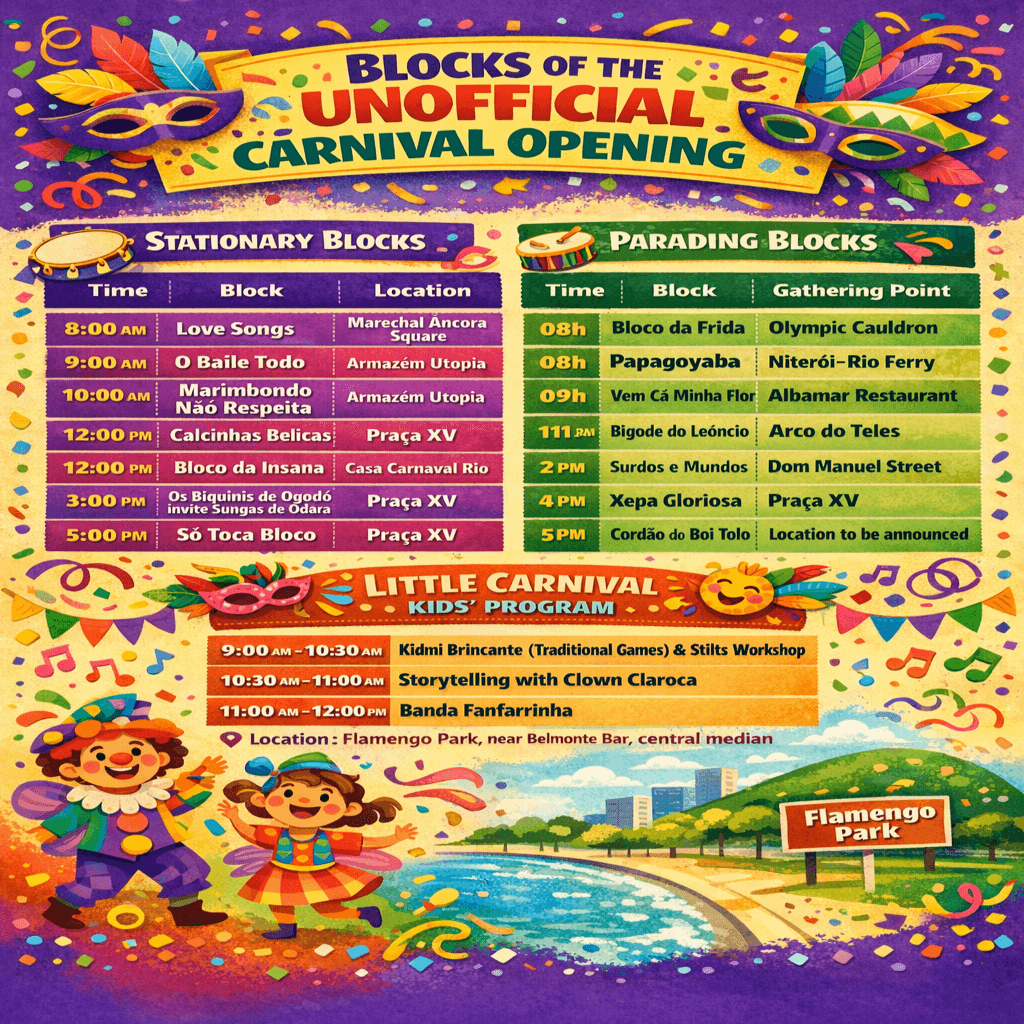
Most of the action takes place in downtown Rio, especially around Praça XV, Praça Marechal Âncora, Armazém Utopia, and nearby streets. These areas are traditionally associated with carnival gatherings and offer easy access by public transportation.
In addition, some blocks start from symbolic locations such as the Olympic Cauldron and even from a ferry crossing between Niterói and Rio, turning the commute into part of the celebration.
Stationary Blocks: Music Without Moving
Stationary blocks are ideal for people who prefer to enjoy the music without walking long distances. These blocks perform in fixed locations, creating a relaxed environment for dancing, socializing, and meeting friends.
They feature a wide range of musical styles, including samba, ska, Afro-Brazilian rhythms, brass bands, and experimental carnival sounds. Many take place in cultural spaces or squares that already serve as hubs for street culture.
Parading Blocks: The Classic Carnival Walk
For those who enjoy following the music through the streets, parading blocks offer the traditional carnival experience. These groups move slowly through the city, gathering crowds as they go.
Participants are encouraged to arrive early, wear comfortable clothes, and stay hydrated. The pace is usually relaxed, but the energy remains high throughout the day.
The Cordão do Boi Tolo Phenomenon
One of the most anticipated moments of the unofficial carnival opening is the large collective parade led by Cordão do Boi Tolo. Known for its massive crowds and unpredictable routes, the block has become a symbol of Rio’s street carnival culture.
The final location is usually announced at the last minute through social media, reinforcing the spontaneous and organic nature of the event. Thousands of people typically join this closing parade, turning it into one of the largest gatherings of the day.
Little Carnival: A Special Program for Children
This year, organizers introduced a dedicated children’s program called Aberturinha, designed to welcome families and young children into the carnival spirit.
Held at Flamengo Park, the program includes traditional games, storytelling, music, and interactive workshops. The activities are educational, inclusive, and carefully planned to offer a safe and joyful environment for kids.
This initiative highlights the growing effort to make carnival accessible to all ages, reinforcing its role as a cultural celebration rather than just a party.
Children’s Program Schedule
Activities include traditional Brazilian games, stilt-walking workshops, storytelling with a clown character, and a live children’s band performance. The event takes place in the central median of Flamengo Park, near Belmonte Bar.
Practical Tips for Enjoying the Event
Visitors are advised to arrive early, especially for popular blocks. Sunscreen, water, and comfortable shoes are essential. It is also recommended to bring small bills and avoid glass containers.
Respecting public spaces, local residents, and fellow revelers helps maintain the positive atmosphere that defines Rio’s street carnival.
Why the Unofficial Carnival Opening Matters
The unofficial carnival opening is more than a collection of street parties. It is a cultural statement that reinforces the importance of public space, artistic freedom, and collective joy.
For locals, it marks the emotional start of the year. For visitors, it offers an authentic glimpse into Rio’s carnival culture, away from grandstands and ticketed events.
Understanding how the unofficial carnival opening works allows participants to fully appreciate its rhythm, diversity, and social significance.
Frequently Asked Questions
Is the unofficial carnival opening free?
Yes. All blocks are free and open to the public.
Do I need tickets or registration?
No tickets are required.
Is it suitable for children?
Yes, especially the children’s program at Flamengo Park.
Does the event happen if it rains?
Most blocks perform regardless of light rain.
Can I bring my own drinks?
Yes, but glass containers should be avoided.
Are the schedules exact?
Carnival follows its own rhythm. Times are approximate.
Conclusion
The unofficial carnival opening transforms Rio de Janeiro into a living celebration of music, creativity, and community. With seventy blocks, diverse musical styles, and a dedicated children’s program, the event captures the true essence of street carnival.
Whether downtown among historic streets or at Flamengo Park with family, the city invites everyone to celebrate together. Once the unofficial opening begins, carnival season has truly arrived.
About The Author