
Is the Paris Museum Pass worth it? 2026 prices, attractions and comparison
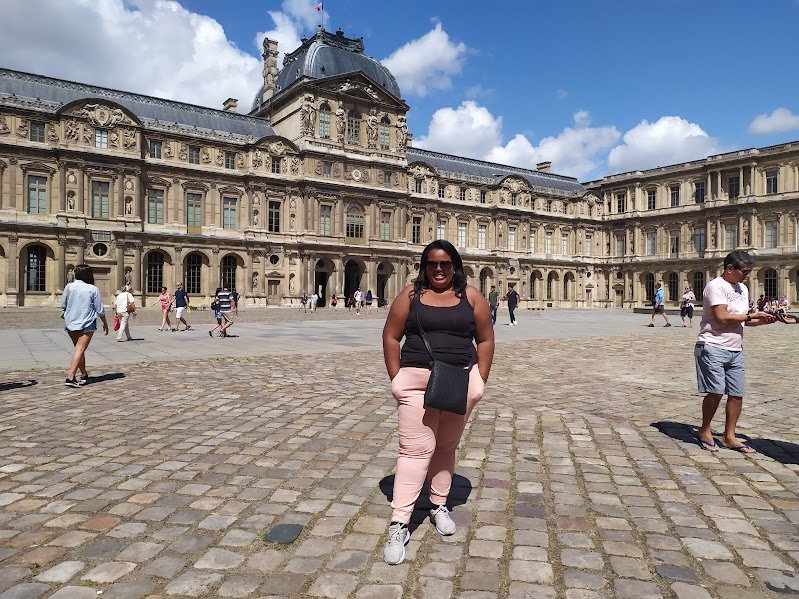
Is the Paris Museum Pass worth it? It depends on how many paid attractions you plan to visit and on the availability of time slots. The pass can save you money, but it can also cost more than individual tickets if you prefer to explore Paris at a leisurely pace.
Paris Museum Pass: price overview
| Duration | Official price checked | Profile |
|---|---|---|
| 48 hours | €85 | Concentrated sightseeing |
| 96 hours | €105 | Several days of cultural visits |
| 144 hours | €125 | Long itineraries and many museums |
Prices checked in November 2026 on the official portal. Prices may change, and some points of sale charge additional fees.
What is the Paris Museum Pass?
The Paris Museum Pass is a pass for visiting more than 50 museums and monuments in Paris and the surrounding area, according to the official operator. It entitles you to one admission per participating site for 48, 96 or 144 consecutive hours from the time of first use. Do not confuse this product with broader sightseeing passes that include other types of tours. Its main advantage is consolidating admissions into a single purchase when travelers plan to visit several paid museums.
This does not mean unlimited access to everything: temporary exhibitions are not necessarily included, and some attractions require advance reservations even from pass holders. The purpose of this article is to show, with calculations, when the product is worthwhile.
How much does the Paris Museum Pass cost in 2026?
The official table checked in November 2026 lists prices of €85 for 2 days (48 hours), €105 for 4 days (96 hours) and €125 for 6 days (144 hours). Validity begins with the first use, not necessarily on the purchase date. Some intermediaries may charge extra fees, so check the total price at the time of payment.
The pass is non-refundable and non-exchangeable according to the terms published on the official website. Anyone planning a future visit should review prices, eligibility for free admission and operating conditions before buying.
Which museums and attractions are included?
The participating sites listed include the Louvre, Musée d’Orsay, Arc de Triomphe, Sainte-Chapelle, Musée Rodin, Army Museum and the Versailles complex, subject to the conditions indicated by the operator. Participation may change because of renovation work or specific access rules.
Before choosing the pass, make a list only of the attractions you would genuinely visit. Check each attraction’s website for specific time slots, entry restrictions and any ticket category that may not be covered.
Is the Louvre included in the Paris Museum Pass?
The Louvre is on the official list, but your visit must be planned according to the current rules and reservation requirements. There is no point buying the pass and then discovering that no convenient time is available for your itinerary. Large museums also require time for the visit and transportation.
If the Louvre is your priority, check availability at the museum first. Plan the rest of Paris around the confirmed time, not the other way around.
How much do individual tickets cost?
For comparison purposes, the pass’s own portal publishes reference prices for individual tickets: Louvre €32; Versailles and Trianon €25; Sainte-Chapelle €22; Arc de Triomphe €22; Musée d’Orsay €16; Rodin €15; Army Museum €17. These are the operator’s reference prices and are subject to specific rules and ticket categories.
These prices do not replace checking the official ticket office for each attraction. If you are entitled to free admission or a reduced fare, do the calculations using your actual price, not the full adult rate.
Two-day example: does the 48-hour pass save money?
Imagine visiting the Louvre (€32), Sainte-Chapelle (€22), Arc de Triomphe (€22) and Musée d’Orsay (€16). The reference total is €92; compared with the €85 pass, the theoretical saving would be €7. This result is valid only if you can visit everything within 48 hours and these are the applicable ticket prices.
That is a small difference when you consider the possibility of skipping an attraction because of tiredness or a lack of convenient time slots. For two days, use the potential saving as one factor in your decision, not the sole reason to buy.
Four-day example: is the 96-hour pass worthwhile?
Consider the Louvre (€32), Sainte-Chapelle (€22), Arc de Triomphe (€22), Musée d’Orsay (€16), Rodin (€15) and Army Museum (€17). The indicative total is €124. With the four-day pass at €105, the theoretical difference would be €19 per person.
Four days offer more freedom to spread out your visits, but remember that museums close on specific days and some attractions require reservations. An enjoyable itinerary should not feel like a race to recoup the money spent.
What if I want to visit Versailles?
Versailles can take up much of a day. The pass includes the types of admission advertised for the complex, but services, gardens, events and specific areas may have their own rules. Check that the ticket you would buy separately corresponds to the coverage provided by the pass.
A long visit leaves less time for other museums during the validity period, which can reduce the savings. In that case, compare the cost of a few priority tickets with the price of the pass.
Does the pass let you skip all the lines?
No. The pass may simplify ticketing at some sites, but security checks, entrance queues and timed reservations still apply. The best way to avoid wasting time is to reserve when necessary and allow extra time for travel between attractions.
Avoid buying a product based solely on promises of “skip-the-line” access. Check which steps are actually waived and which remain mandatory for visitors.
Is validity counted in full days or hours?
Validity begins with the first use and continues for 48, 96 or 144 consecutive hours. This allows you to activate the pass at a specific time and use it until the same time a few days later, provided the attractions are open.
Do not waste the activation on a visit lasting only a few minutes at the end of the day if most museums are already closing. Plan to start when you can begin a real sequence of visits.
Paris Museum Pass or individual tickets?
Buying tickets separately tends to be better for people who want to visit only a few museums or prefer free activities such as parks, bridges and neighborhoods. The pass tends to offer better value for intensive cultural itineraries with several participating paid attractions and compatible time slots.
A good rule is to add up only the tickets you would buy even without a discount. If that total exceeds the price of the pass by a meaningful margin and reservations are available, buying the pass starts to make sense.
Is it worthwhile for a couple’s trip?
For a couple, any difference per person is doubled. A theoretical saving of €19 per visitor means €38 for two adults under the same conditions. But the decision should take both people’s pace into account: if one person enjoys spending hours in museums while the other prefers strolling through the streets, an overly concentrated schedule could detract from the trip.
Make a joint list and choose the essential sites. A more relaxed itinerary with individual tickets may offer better value.
Families, children and visitors eligible for free admission
Several institutions offer free admission to minors and certain young residents of the European Union. The pass portal highlights this, so a family should not automatically buy four identical passes.
Check each museum’s rules, required documents and free reservations, when applicable. The correct calculation may differ for each person in the same group.
A relaxed two-day cultural itinerary
One possible itinerary starts at the Louvre, allowing enough time to visit the priority areas, followed by a monument that fits the reservation time. On the second day, Musée d’Orsay can be combined with another nearby attraction, taking walking time and security queues into account.
Avoid scheduling five museums a day just to exceed the cost of the pass. Being able to enjoy each experience matters more than the number of visits.
A four-day itinerary for using the pass
Spread major museums across different days and set aside time for a panoramic monument or a trip to Versailles. Group geographically close sites when possible, but remember that entry to busy attractions often depends on a specific time slot.
Actual availability should determine the order of your itinerary. If your priority museum has openings only on a particular afternoon, rearrange the other activities around it.
What is not included in the Paris Museum Pass?
Do not assume that urban transport, accommodation, meals, every attraction in the city or temporary exhibitions are included without expressly checking the coverage. The Eiffel Tower is not on the list of participating museums and monuments presented on the pass website.
It is important to distinguish the Paris Museum Pass from other commercial products with similar names. Compare the terms, not the title of the offer.
How to buy the pass safely
The operator offers online purchases and publishes information about physical points of sale. Use official channels and compare additional fees. Keep your receipts, check the activation rules and make the reservations required by priority attractions.
When using partner platforms for other activities in Paris, always check whether you are buying an individual ticket, a guided tour or a pass. Different products may have different cancellation policies.
Common mistakes and final decision
The most common mistakes are buying before checking Louvre availability, adding too many attractions to too few hours, overlooking free admission and confusing the museum pass with broader sightseeing cards. Plan your list, do the math, check the time slots and only then buy.
In short, the Paris Museum Pass is worthwhile for people who will make several consecutive visits to paid attractions. Those who want to explore Paris at a leisurely pace, alternating museums with streets and parks, may save money by buying individual tickets.
Plan your trip with our other guides
- Europe: complete guide
- How to plan an international trip
- How much does it cost to travel in 2026?
- Lisbon or Porto
Accommodation, flights and tours with partners
Some links below are affiliate links and may generate a commission for Viagens e Lugares. There is no guarantee of the lowest price; compare terms and fares.
How to calculate savings per person without getting it wrong
To compare the pass with individual tickets, start with a list of the museums each person genuinely wants to visit. Next to each one, note the price applicable to that person’s profile and whether a reservation is required. Then distribute the visits across the days and see how many fit within the validity period. Add up only what is feasible, not your entire wish list.
If the total cost of the tickets exceeds the price of the pass by only a few euros, consider the risk of itinerary changes, tiredness and unavailable time slots. A small advantage on paper may not represent real savings by the end of the trip.
Simulation table with three traveler profiles
A traveler who visits only the Louvre (€32) and Musée d’Orsay (€16) would spend €48 at the reference prices, less than the 48-hour pass at €85. Someone who adds the Louvre, Sainte-Chapelle, Arc de Triomphe and Musée d’Orsay would reach €92, slightly more than the pass. A third visitor interested in six attractions over four days could exceed €105.
These examples show how the same product can be a waste of money for one person and worthwhile for another. Recalculate using the official prices and discounts that apply to your circumstances.
How to organize large museums and shorter monument visits
The Louvre and Musée d’Orsay can take several hours, especially if you want to view the collections at a leisurely pace. Monuments such as the Arc de Triomphe and Sainte-Chapelle may take less time to visit, but they still depend on queues, time slots and travel. Combine no more than one major attraction with one or two smaller ones per day, depending on your pace.
A balanced itinerary can provide more opportunities for photographs, a better understanding of the spaces and pleasant breaks. The pass calculation should support this experience, not turn it into a competition to collect admissions.
Is it worthwhile for a five-day stay in Paris?
On a five-day trip, you can set aside two consecutive days for paid museums and use the remaining days to explore neighborhoods, parks and outdoor attractions. In this case, the 48-hour pass may be enough, provided the attractions genuinely fit within that period. Another option is to spread visits over four days with a 96-hour pass.
Do not choose the pass based on the total length of your stay. Choose it based on the number of days when you plan to visit participating attractions and the available reservation times.
Visiting Paris for the first time: how to balance your itinerary
A first trip often includes many wishes: the Eiffel Tower, the Louvre, Montmartre, Île de la Cité, parks, neighborhoods and food. The Paris Museum Pass does not cover everything. If most of your priorities are outside the catalog, the product may not be suitable, even if it appears popular.
Build an itinerary with all your desired experiences, mark which ones are paid and participating, and only then compare the options. This helps you avoid a purchase driven by marketing rather than by the trip you actually want to take.
The Paris Museum Pass on rainy days
Museums can be good options on rainy days, but do not assume that everything can be freely rescheduled at the last minute. Attractions requiring reservations may have no available time slots, while others may limit access under specific rules. A pass with consecutive validity does not stop counting hours when the weather is bad.
If the forecast calls for several rainy days, organize indoor visits in advance. Also keep alternatives in mind for times when the museums you selected are closed.
What is the difference between the ticket price and the cost of a visit?
The ticket is only part of the cost. Transportation to Versailles, meals, special visits and any additional fees do not disappear just because you have a pass. There is also an opportunity cost: spending hours traveling may mean missing another part of Paris.
When comparing two itineraries, consider the total cost in both money and time. Saving a few euros while losing half a day to connections may not be the best decision on a short trip.
When should you buy: before traveling or in Paris?
Buying in advance can make planning easier, but the most important thing is to check available time slots for museums requiring reservations and review the sales and activation policies. If you still do not know which days will be dedicated to attractions, a rushed purchase could cause problems.
If you prefer to buy in person, check the official points of sale and their opening hours. Do not assume that every ticket office will have unlimited availability or that the pass guarantees immediate access to your chosen site.
A pass for a couple with different interests
If one person enjoys art and the other prefers urban architecture, it may be better to buy a pass only for the person planning to visit many collections—as long as the couple is comfortable doing some activities separately. Another option is to select museums you both want to visit and buy individual tickets for both of you.
The aim of a couples’ holiday is not necessarily to enter every attraction together. The best decision combines preferences, available time and budget without creating unnecessary obligations.
How to deal with closures and renovation work
Museums may close on fixed days of the week, undergo temporary changes to their opening arrangements or restrict access to certain areas. A classic example is booking a trip without checking the schedule of priority attractions. The pass does not change these limitations.
Check the official websites close to your travel date, especially if you plan to visit sites undergoing renovation work or hosting special exhibitions. Create a backup plan so you do not waste the pass’s validity hours.
What to bring on the day you use the pass
Have access to the electronic or physical ticket, depending on the product purchased, an identity document when required and confirmation of scheduled time slots. Also save each attraction’s address on your phone and check how to get there by metro or on foot.
If you are traveling in a group, confirm that everyone has their own ticket and that reservations were made for the correct number of people. This helps you avoid wasting time at the entrance and makes it easier to enjoy the day.
Final verdict: four questions to ask
Before buying, ask yourself: How many paid museums do I genuinely want to visit? Is the total cost of the tickets higher than the price of the pass? Are reservation times available? Do I have the energy to visit everything within the validity period? If the answers are yes and the financial difference makes sense, the pass may be a good purchase.
If one of the answers is no, it is worth reconsidering. Paris offers many experiences that do not require this type of ticket, and a less crowded itinerary may provide more enjoyment and flexibility.
Final checklist before buying
Confirm the prices of the pass and individual attractions, including possible free-admission options. Check reservation availability, the date and time of first use, the consecutive validity period and the access rules. Schedule major visits on different days, with realistic travel times. Do not buy based on the advertised number of museums: only attractions that genuinely fit your itinerary and that you would visit even without the pass count toward your savings. Check for possible closures, temporary exhibitions charged separately and the refund policy. If the calculated saving is small, consider whether the flexibility of buying individual tickets would be more valuable for your trip.
Frequently asked questions
Does the Paris Museum Pass include the Louvre?
Yes, the Louvre is part of the catalog, but you must follow the entry rules and reservation requirements. Check availability before buying.
Does the pass include the Eiffel Tower?
No, the Eiffel Tower is not on the list of attractions included in the official product consulted. Look for separate tickets if you plan to visit it.
Do I need a reservation even with the pass?
Yes, at certain sites. The pass does not eliminate timed reservations or security checks.
Is there a three-day pass?
No. The official website presents versions valid for 48, 96 and 144 consecutive hours.
Is it cheaper to buy individual tickets?
It depends. Add up the cost of each museum you would actually visit and compare it with the price of the pass. If you are entitled to free admission, buying tickets separately may be better value.
Can the pass be used twice at the same museum?
The operator states that it entitles holders to one admission per participating attraction. Check the official terms before planning repeat visits.
Official sources
Paris Museum Pass: prices and conditions; list of participating museums. Updated in November 2026.
About The Author


