
Free Walking Tour of Rome in Portuguese: Route, Tips and Booking
Would you like to discover Rome’s most famous squares with explanations in Portuguese without booking a tour with a fixed fee? A free tour is an interesting option for a first trip. In this Viagens e Lugares guide, we explain how the experience works, what is included, its restrictions and the best way to fit it into your itinerary. The conditions below were checked in November 2026 and should be confirmed before booking.
Editorial transparency: we may receive a commission for bookings made through affiliate links, at no additional cost to the reader. This content was prepared using public sources and does not claim personal participation in the tour.

Tour summary before booking
- Duration: 2 hours 30 minutes
- Language: Portuguese
- Inclusions: Portuguese-speaking guide; headphone rental for €1 not included
- Meeting point: Basilica of Santa Maria del Popolo
- Cancellation: free cancellation; let them know if you cannot attend
- Accessibility: not suitable for people with reduced mobility
How the free tour in Rome works
Booking the free tour does not involve a mandatory upfront fee. At the end, participants decide how much to give the guide, taking the experience and their own means into account. The tour is not a way to receive free labor: voluntary payment is part of the model and should be included in your budget planning. The service described on Civitatis lists an additional charge for headphone rental, separate from the contribution to the professional.
What itinerary is advertised?
The itinerary begins near the Basilica of Santa Maria del Popolo and explores the Historic Center, including Piazza di Spagna, Trevi Fountain and the exterior of the Pantheon, ending at Piazza Navona. The sequence and stops may be adjusted operationally. This is primarily a walking tour involving views of monuments and historical explanations, not an admission ticket to visit the interiors of all these buildings.
Trevi Fountain: what you will learn
Trevi Fountain is one of the symbols of Roman Baroque. Its appeal lies in the composition of its sculptures and the transformation of the urban space into a monumental setting. The guide provides historical and cinematic context, but visitors can also use the tour to locate the fountain and return at another time to take a closer look. Access rules around the fountain may be changed by the municipality.
Pantheon: is seeing it from outside enough?
On the free tour, the description emphasizes viewing the Pantheon from outside. If your goal is to see the dome and interior of the historic temple, you will need to plan a separate visit and check the official conditions. It is important not to book the free tour thinking that it includes a ticket or an interior visit. The tour works as an introduction to the city center and helps you decide which attractions deserve more time later.
Piazza Navona: why end there?
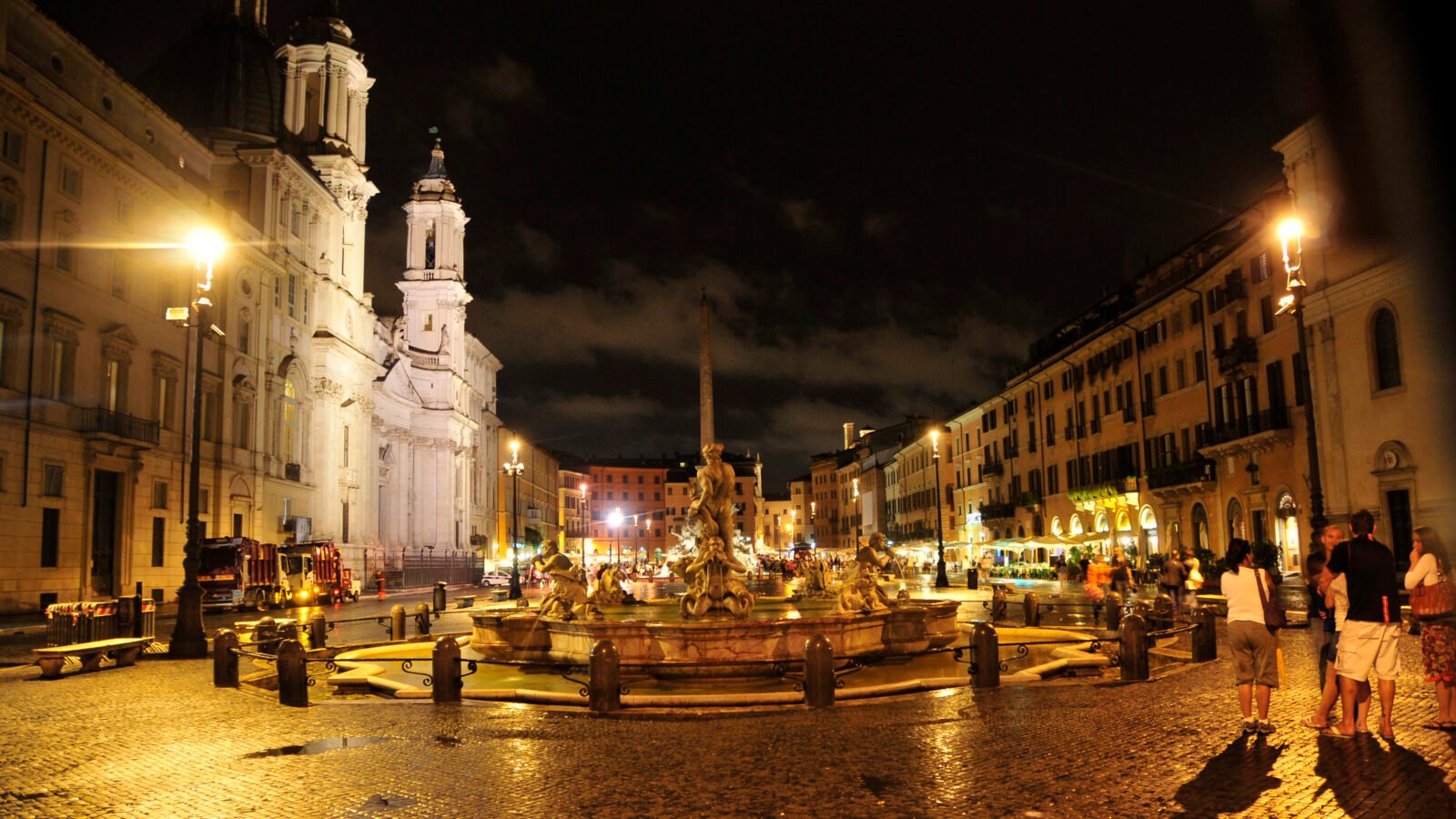
Piazza Navona brings together fountains, façades and a spatial layout that helps explain Baroque Rome. Ending an itinerary there makes sense because you can continue walking or stop for a meal. The square is also a useful reference point for exploring other streets in the Historic Center. Do not confuse the duration of the tour with the time needed to enter the museums and churches in the surrounding area.
Planning your trip? Check the activity’s updated times and rules.
How many people can take part?
The activity states that the free tour does not accept groups of more than six people, even when separate bookings are made. For large families and groups of friends, a private tour may be the more suitable option. Respecting this limit helps avoid problems on arrival. If you are traveling as a family, also check the walking pace and schedule.
Is it worthwhile for a first visit to Rome?
Yes. Visitors arriving in the city unfamiliar with its squares, architectural styles and distances may benefit from an organized route. The main value lies in the historical context provided in Portuguese and in discovering areas that can be revisited independently. Those who already know the Historic Center well may find greater novelty in a themed archaeology or food tour.
What does the tour not include?
Do not assume that admission to the Colosseum, Vatican Museums or interior of the Pantheon, or meals, are included. The activity is a guided walk through the city center, with additional expenses such as headphones, transportation to the meeting point and a voluntary contribution to the guide. This transparency is important for anyone calculating the cost of traveling to Rome and looking for genuinely budget-friendly tours.
How do you get to the meeting point?
Mark the Basilica of Santa Maria del Popolo on the map and use the full address provided in your confirmation. Piazza del Popolo is in a central area, but the journey from your hotel can vary considerably. Arrive early and look for the identification provided by the operator. Someone presenting themselves as a guide in the square is not necessarily responsible for your booking.
Best time of day and time of year
The walk passes through squares exposed to the sun, so the weather affects comfort. During the warmer months, bring water, wear light clothing and choose suitable footwear. In winter, be prepared for rain and colder evenings. Choose your session according to the rest of your itinerary and do not schedule another activity with a fixed start time immediately after the estimated end of the tour.
Is a free tour really free?
Participation does not require a fixed price upfront, but the contribution to the guide is the customary form of payment. This is not the same as a municipal activity with no operating costs. If your intention is to spend absolutely nothing, an independent walk may be more consistent with your plans. For those who value the explanations, the voluntary model allows the contribution to be adjusted to the experience.
Planning your trip? Check the activity’s updated times and rules.
How to avoid confusion with other free tours
Rome offers several free tours, including evening and themed options. Check the activity name, language and meeting point before booking. The tour described in this guide explores the Historic Center and advertises a Portuguese-speaking guide; it is not the same as an evening tour of Imperial Rome or an itinerary through Trastevere. These formats can complement one another without competing for the same purpose.
What to do after the free tour
Since the tour ends at Piazza Navona, an easy continuation is to explore the nearby streets and choose a place to eat. You can also set aside time to visit the interior of the Pantheon later, if tickets and a suitable time are available. Avoid scheduling a Colosseum or Vatican tour immediately afterward, as getting between locations may consume a significant part of the available interval.
What to bring
Bring your voucher, water, comfortable shoes and cash or a suitable payment method for the contribution to the guide, according to the accepted conditions. Headphone rental is listed separately. As the group moves around on foot, large suitcases and backpacks can be cumbersome. For families, consider the children’s energy levels.
Cancellation and responsibility toward the guide
The booking is free, but Civitatis asks you to cancel if you cannot attend. This allows the guide to organize the group more effectively and release the spot. Failing to show up without notice harms a service whose operation depends on participants being present. Cancel through the channel listed in your confirmation and, if your plans change, try to do so in advance.
Is it suitable for wheelchair users?
The activity described is not suitable for people with reduced mobility. This restriction applies specifically to the group itinerary and does not prove that the entire central area of Rome is inaccessible. Anyone needing an adapted route should research accessible tours and check the surfaces, distance, breaks and transportation options before booking.
Free tour or paid guided visit?
The free tour is an excellent way to see the squares and receive an introduction to the city; a paid guided visit with admission included may be better for museums, the Colosseum and archaeological sites with controlled entry. Compare objectives, not just the price difference. You can use the free tour to gain an overview and book specialized tours for the monuments that matter most to you.
Planning your trip? Check the activity’s updated times and rules.
Is it worth booking through Civitatis?
Booking in advance allows you to select a session and receive information about the group. The platform provides the language, meeting point and cancellation rules. The visitor’s main responsibility is to arrive on time and make a thoughtful contribution to the guide. Check your voucher for the applicable instructions for your date.
Frequently asked questions
What language is the activity in?
Portuguese. Also check the specific instructions for your session.
Is it possible to cancel?
According to the offer consulted: free cancellation; let them know if you cannot attend. The definitive conditions appear in the booking.
Does the tour include transportation?
Do not assume that transportation is included unless this is explicitly stated; arrange your own way to the meeting point.
Is the tour accessible?
Not suitable for people with reduced mobility. Anyone requiring adaptations should confirm them with the operator.
Is it worth doing independently?
It depends on your interest in independence, total cost, language and logistics. Compare admission fees and transportation costs before deciding.
Further reading on Viagens e Lugares
- Things to do in Rome
- Where to stay in Rome
- How to visit the Colosseum and Roman Forum
- Vatican Museums and Sistine Chapel
Tour source: Civitatis description and booking with our affiliate identifier. Check availability before booking.
About The Author


