
Tivoli Day Trip from Rome: Villa d’Este and Hadrian’s Villa
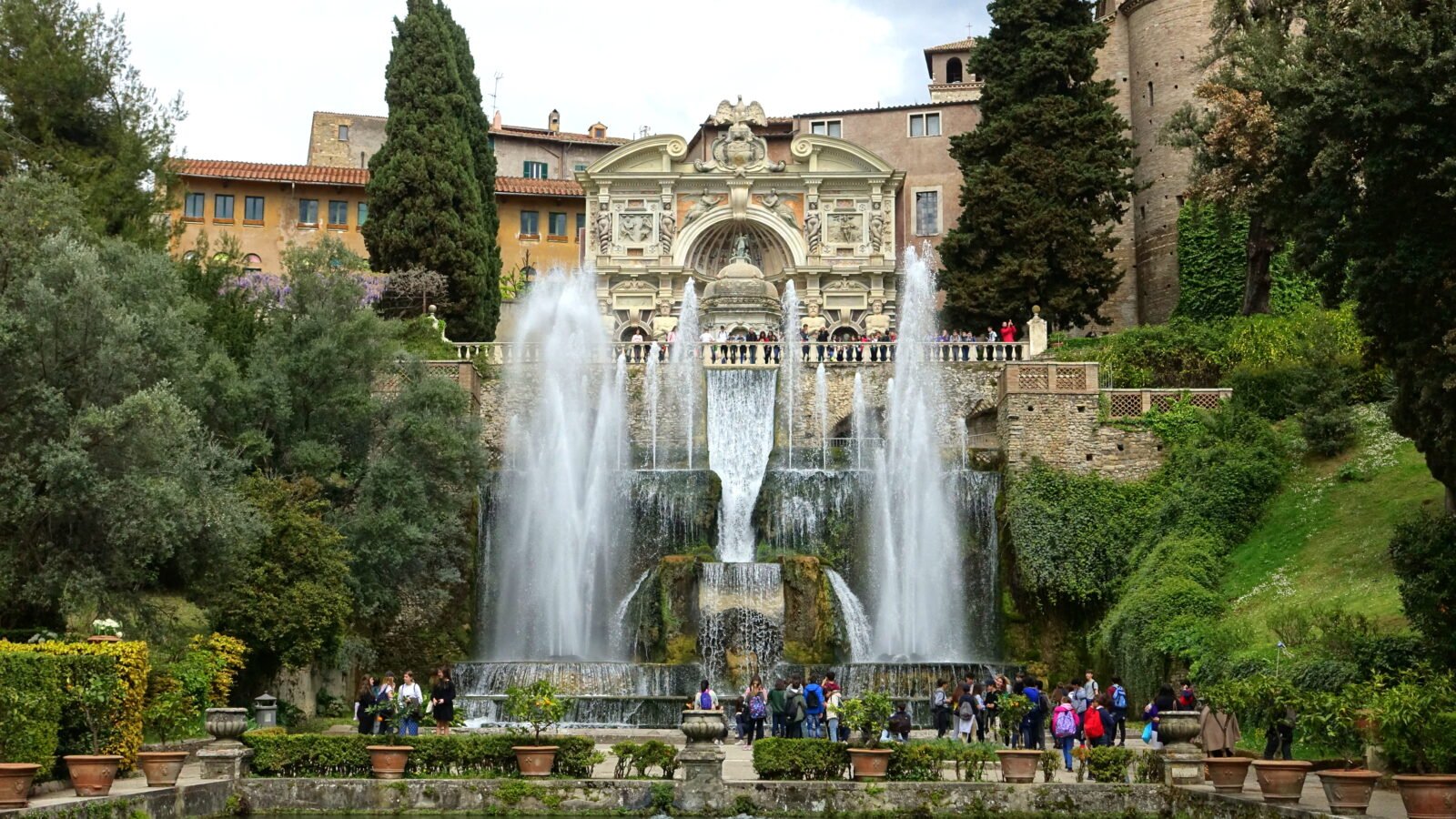
Want to leave Rome for a few hours and visit a Renaissance palace with fountains, as well as the archaeological complex associated with Emperor Hadrian? Tivoli is a cultural day-trip option. In this Viagens e Lugares guide, we explain how the experience works, what is included, the restrictions and the best way to fit it into your itinerary. The conditions below were checked in November 2026 and should be confirmed before payment.
Editorial transparency: we may receive a commission for bookings made through affiliate links, at no additional cost to the reader. This content was prepared using public sources and does not claim personal participation in the tour.

Tour overview before booking
- Duration: 5 hours
- Language: Spanish
- Inclusions: bus transportation, Spanish-speaking guide, admission to Villa Adriana and Villa d’Este, and headphones; pickup depends on the option selected
- Meeting point: pickup from centrally located hotels with 24-hour reception, depending on the option selected; without pickup, Viale de Giorgio Washington, next to Villa Borghese
- Cancellation: free up to 24 hours in advance
- Accessibility: not accessible to people with reduced mobility
Why take a trip to Tivoli?
Tivoli offers an interesting contrast to Rome’s urban experience. Instead of focusing your visit on the capital’s amphitheaters and museums, the tour combines an archaeological imperial residence with a Renaissance palace featuring gardens and fountains. This combination helps explain how different eras used landscape, water and architecture to express prestige.
What is included with Civitatis?
The activity is advertised as lasting five hours and includes bus transportation, a Spanish-speaking guide, admission to Villa Adriana and Villa d’Este, and headphones. Hotel pickup depends on the option selected and specific conditions. Do not promise a Portuguese-speaking guide: the page consulted advertises Spanish. Check the final price and booking confirmation.
What is Villa Adriana?
Villa Adriana is the archaeological complex associated with Emperor Hadrian, built in the second century. The site contains remains of residences, baths and monumental structures that reveal the scale of imperial life outside central Rome. It is not a modern villa preserved with its furniture intact, but an archaeological site that requires historical interpretation.
What can you see at Villa Adriana?
The best experience comes from observing how the buildings, reflecting pools and courtyards relate to one another within a planned landscape. The guide can help explain the function of the spaces and the influence of Greek and Egyptian architectural references. Since the excursion is compact, visitors should expect a selection of highlights rather than an exhaustive exploration of the entire site.
Villa d’Este: gardens and fountains
Villa d’Este is known for its Renaissance architecture and, above all, its gardens with numerous fountains. The complex demonstrates the role of water and landscaping as ways of creating visual and symbolic spectacle. It is a different experience from Villa Adriana: here, the main focus is the composition of the garden and the decoration of a Renaissance residence.
Planning your trip? Check the activity’s updated hours and rules.
The Organ Fountain and Hundred Fountains
The advertised itinerary highlights the Hydraulic Organ Fountain and the Hundred Fountains. These are useful references for understanding why the garden is famous. The operation and functioning of hydraulic features may vary according to maintenance and local conditions. Do not book expecting shows or specific effects at times that have not been confirmed.
Can you visit both villas on the same day?
Yes, Civitatis organizes a five-hour excursion that includes admission to both sites. The advantage is coordinated transportation and scheduling. On the other hand, visitors who prefer to spend long periods exploring the gardens and archaeological remains may feel they need more time at each location. An independent full-day trip may be an alternative.
Hotel pickup: pay attention to the option selected
The page states that pickup is available from centrally located hotels with 24-hour reception, depending on the option booked. Apartments and accommodations without these features may require meeting at Viale de Giorgio Washington, opposite Villa Borghese. Confirm the meeting point in your booking before setting out. Do not advertise transfers from every hotel in Rome, as this is not guaranteed.
Where does the return journey end?
The excursion description states that it ends near Piazzale Flaminio in Rome. This means that not every option should be understood as returning you to your hotel door. Plan how you will get to your accommodation or your next activity. The final drop-off point is important when calculating your transportation time and budget.
What might involve an additional fee?
If there is a temporary exhibition at one of the villas on the date of your visit, the page states that the guide may request an additional €3. The rule may change and should be checked when booking. This amount should not be interpreted as the general admission price or as a fee that is always charged.
Is it better to go independently?
Independent travel is appealing to those who want to devote many hours to both attractions, prefer a guide in another language or wish to control their breaks and transportation. An organized excursion reduces the planning involved and covers the highlights in five hours. The price difference should be assessed alongside transportation, admission fees and the time required for organization.
Planning your trip? Check the activity’s updated hours and rules.
Is the Spanish-language tour a problem?
It depends on your familiarity with the language. Brazilians can often follow basic explanations in Spanish, but that does not mean everyone will understand historical details. If a Portuguese-speaking guide is essential, look for an alternative before booking. The language information should be clear at the beginning of the article and in the booking callout.
Accessibility and walking
The activity states that it is not suitable for people with reduced mobility. Villa Adriana has extensive archaeological areas, while Villa d’Este includes gardens and changes in elevation. Anyone who needs an adapted route should research the resources available at each attraction and suitable transportation directly. Accessibility at one site does not imply that every group tour is accessible.
Best time to visit
The gardens of Villa d’Este change with the seasons, and the weather affects the experience. In summer, sun protection and hydration are important; on rainy days, the ground may become slippery. There is no universally perfect date. Check opening arrangements, ticket availability and the weather forecast close to your visit.
Is it a good option for children?
The fountains may be very appealing to children, but the archaeological areas and the five-hour schedule require attention. The page mentions free admission for children under three, subject to the booking conditions. Families should consider strollers, breaks, food and accessibility restrictions before completing the purchase.
How to plan a four-day itinerary in Rome
Tivoli works best when your Rome itinerary already includes separate periods for the Colosseum and the Vatican. A four- or five-day trip allows you to fit in a half-day excursion without completely sacrificing the main attractions. On trips of one or two days, the journey may take up too much time compared with staying in the city center.
What to bring to Tivoli
Bring your voucher, identification, comfortable shoes and suitable protection for the weather. Consider carrying water and snacks according to local rules, as the excursion involves transportation and walking. Check whether there is a meal stop and do not assume that lunch is included. This is a sightseeing and cultural itinerary, not an accommodation or meal package.
Planning your trip? Check the activity’s updated hours and rules.
Cancellation and booking
Civitatis states that cancellation is free up to 24 hours in advance, provided the deadline is met. Delays and no-shows may not qualify for a refund. Review the pickup point, start time and drop-off location. Booking this activity requires careful planning, especially for those with another fixed commitment that same afternoon.
Frequently asked questions
What language is the activity in?
Spanish. Also check the specific instructions for your session.
Can I cancel?
According to the offer consulted: free up to 24 hours in advance. The final conditions are stated in the booking.
Does the tour include transportation?
Yes, under the conditions indicated in the description; check the meeting and drop-off points.
Is the tour accessible?
It is not accessible to people with reduced mobility. Anyone who requires adaptations should confirm this with the operator.
Is it worth going independently?
It depends on your priorities regarding independence, total cost, language and logistics. Compare admission fees and transportation costs before deciding.
Further reading on Viagens e Lugares
- Things to do in Rome
- Where to stay in Rome
- How to visit the Colosseum and Roman Forum
- Vatican Museums and Sistine Chapel
Tour source: Civitatis description and booking page with our affiliate identifier. Check availability before booking.
About The Author


